
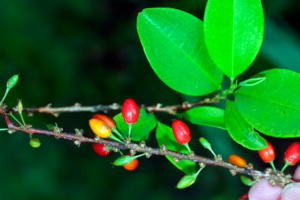
If you are looking at coca plant botany from a scientific point of view, the first thing to know is that we are talking about Erythroxylum coca, a tropical shrub in the family Erythroxylaceae. It is one of the cultivated coca species and is native to the Andes, where it has been used for thousands of years. Modern botanical references describe it as a leafy shrub that usually grows to about 2.4–2.5 meters in cultivation, with straight branches, small clustered flowers, and red berries after pollination.
This article breaks down coca plant botany in a simple way so you can understand the plant’s structure, its main growth stages, and the features that make it so distinctive.
Understanding the coca plant’s overall form
A woody shrub built for warm, humid environments
In botanical terms, coca is not a tree and not a herb. It is a woody shrub that thrives in warm, damp conditions, especially in tropical and subtropical regions. Britannica notes that it grows best in hot, moist situations such as forest clearings, while Kew describes it as a leafy shrub with straight branches and a mature height of around 2.5 meters.
That growth habit is central to coca plant botany. The plant produces many leaves along upright stems, and those leaves are the main part of the plant used in traditional settings and in scientific analysis. The genus Erythroxylum is also notable because it contains species used by Indigenous peoples long before modern domestication and research began.
Leaf anatomy and why the leaves are so recognizable
The shape, veins, and surface of the leaf
The leaves of Erythroxylum coca are usually described as thin, opaque, oval to lance-shaped, and light green. One of the most recognizable traits in coca plant botany is the pair of curved lines on the underside of the leaf, which border a lighter central area around the midrib. Kew, Britannica, and the Muséum national d’Histoire naturelle all highlight this vein pattern as one of the easiest ways to identify coca leaves.
The leaves are generally about 2 to 7 cm long in botanical descriptions, though size can vary with growing conditions. Dried leaves can give off an aromatic scent that some sources compare to tea, which is one reason coca tea has such a distinct identity in Andean cultures.
Why leaf age matters
In coca plant botany, leaf age is not just a detail; it affects chemistry. Studies on leaves from bud development through leaf drop found that alkaloid levels change over time, and that young terminal leaves can contain the highest concentrations during active growth. Another study tracking juvenile development found that alkaloids were already present in plant organs during early growth stages and changed as the plant matured.
That means coca is not chemically static. Its leaves are living metabolic structures that keep changing as they expand, mature, and eventually fall. This is one of the most interesting parts of coca plant botany because it connects anatomy with chemistry.
Flowers and fruit in the coca growth cycle
Small flowers, big reproductive role
Coca flowers are small and usually appear in little clusters at the leaf nodes. Botanical sources describe them as yellow-white or white, with five petals. The pistil forms a three-chambered ovary, which is part of what makes the species a flowering angiosperm rather than a non-flowering plant.
In coca plant botany, flowering marks the plant’s reproductive phase. Once pollinated, the flowers develop into glossy red berries. That fruiting stage completes the visible reproductive cycle and helps explain how the plant renews itself in nature and in cultivation.
What happens during reproductive development
Research focused on reproductive tissues in Erythroxylum coca found that alkaloid content varies across flower buds, flower parts, and leaves. Young leaves at the tip of branches were especially rich in alkaloids, while unopened flower buds, pedicels, perianths, stamens, and pistils also showed measurable levels. That tells us coca’s reproductive cycle is closely linked to its chemical profile as well as its structure.
The growth cycle from young plant to mature shrub
From juvenile growth to a productive plant
The growth cycle in coca plant botany begins with germination and early juvenile development, then moves into branching, leaf expansion, flowering, and fruiting. Controlled studies have followed coca plants for 52 weeks and even 17.5 months to document changes in the leaves and alkaloids during growth, which shows that the plant develops gradually and remains biologically active over a long period.
Coca is also a perennial shrub, meaning it can keep growing and producing leaves for many years when conditions are favorable. Historical and botanical references describe it as a plant that can be cultivated repeatedly rather than harvested once and discarded. That long life cycle is one reason coca has been so important in Andean agriculture and traditional use.
Why environment shapes the growth cycle
Coca grows in regions with warmth, humidity, and reliable moisture, especially on Andean slopes and in tropical mountain environments. Britannica notes that leaves preferred for harvest often come from drier hillside locations, even though the plant itself thrives in warm, damp settings. Kew similarly identifies coca as an Andean plant with a strong relationship to its native environment.
That ecological preference matters because coca plant botany is not just about how the plant looks. It is also about where it grows, how it branches, when it flowers, and how leaf chemistry changes across seasons and developmental stages.
Conclusion
The study of coca plant botany shows a shrub with a very clear structure: straight branches, distinctive oval leaves with curved vein lines, tiny clustered flowers, and red berries after pollination. Its growth cycle moves from juvenile development to mature perennial growth, and its leaf chemistry changes as leaves age and as the plant enters reproduction.
For anyone writing about or selling coca products, understanding coca plant botany adds credibility. It shows that Erythroxylum coca is not just a cultural symbol, but a highly specialized flowering shrub with a distinctive anatomy and a growth cycle shaped by the Andes.